How to Scale a Coaching Business Beyond 1:1 Sessions
The Ceiling Every 1:1 Coach Hits
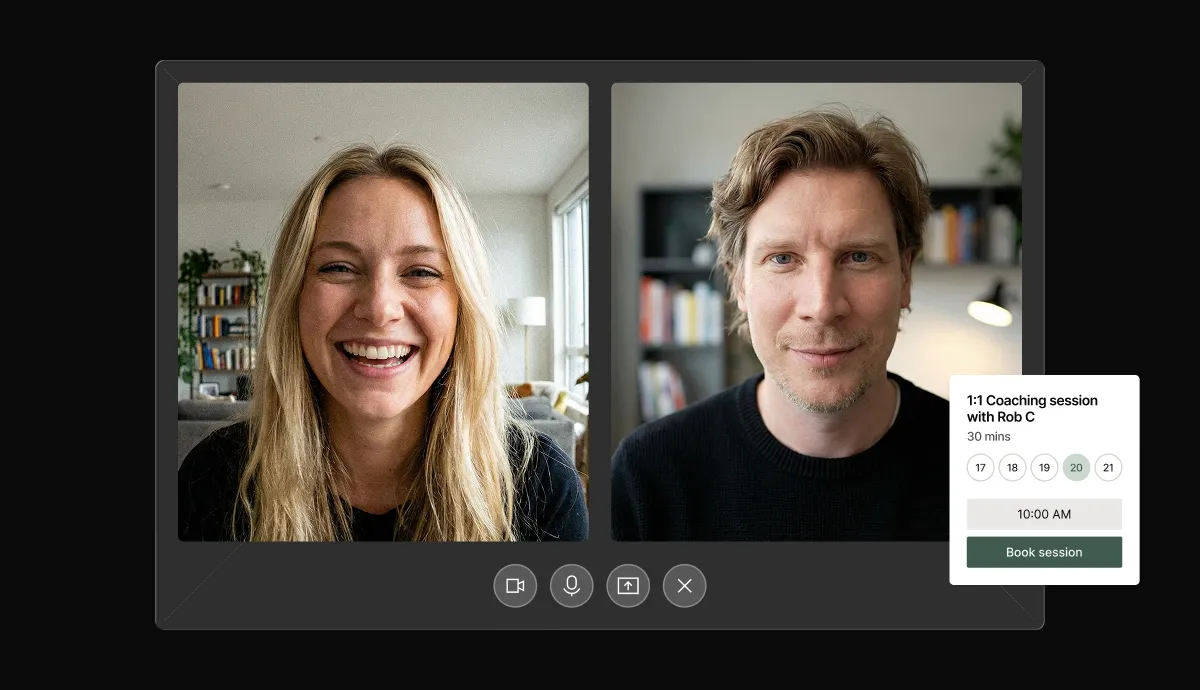
At some point, every coach who builds their business on 1:1 sessions runs into the same wall. There are only so many hours in a week. Once they're full, income is capped. The only ways to grow are to raise prices (which has a ceiling too) or to change the model. Scaling a coaching business means building revenue streams that don't require one more hour of your time for every additional dollar earned.
Step 1: Raise Your Rates First
Before adding new products or formats, maximize the revenue from your current model. Most coaches have room to raise their rates significantly before they've hit the market ceiling. Higher rates mean fewer clients needed for the same income, which creates the margin of time and energy needed to build something new.
The Group Coaching Program
The most natural first step for most coaches is a group program. Taking the curriculum you've developed through 1:1 work and delivering it to a cohort of clients multiplies your revenue per hour significantly. A group of ten clients at $3,000 each generates $30,000 from the same time block that one 1:1 client at $5,000 would.
Online Courses as a Leverage Layer
A self-paced course built around your core methodology can generate revenue without your active involvement. It also serves as an entry point for clients who aren't ready for the full coaching investment, moving them into your ecosystem where they can later upgrade to group or 1:1 work.
Memberships for Recurring Revenue
A membership community gives past and current clients ongoing access to your expertise, resources, and community at a monthly rate. The recurring nature of membership revenue creates income stability that project-based coaching doesn't provide. Even a small membership of 50 to 100 people at $97 per month produces meaningful baseline revenue.
Licensing and Train-the-Trainer
Coaches who have developed a distinctive methodology can license it to other coaches or practitioners who want to use it with their own clients. This model requires strong intellectual property and a proven framework, but it creates revenue that scales entirely independently of your personal time.
Digital Products
Templates, workbooks, frameworks, and toolkits derived from your coaching practice can be sold as standalone products. These are typically lower-ticket but require no ongoing time investment beyond initial creation. They also serve as discovery products that introduce new audiences to your work.
Scale Requires Systems
Adding product layers without building the systems to support them leads to chaos, not scale. Before expanding, invest in the infrastructure: a platform that handles delivery, payments, and communication in one place; automated onboarding sequences; clear processes for each offer. Systems are what make growth sustainable.