Self-Paced vs. Cohort-Based Courses: Which Is Right for Your Business?
The format of your course shapes everything: how students learn, how you deliver it, how you price it, and how much time it takes to run. Self-paced and cohort-based are the two dominant models, and neither is universally better. The right choice depends on your audience, your content, and how you want to work.
What Is a Self-Paced Course?
A self-paced course is pre-recorded and available on demand. Students enroll whenever they want, work through the content at their own speed, and aren't tied to a schedule. Once built, a self-paced course can generate revenue without requiring your active involvement in each delivery.
Best for: Skills-based content, large audiences, passive income goals, or topics where students have very different starting points.
What Is a Cohort-Based Course?
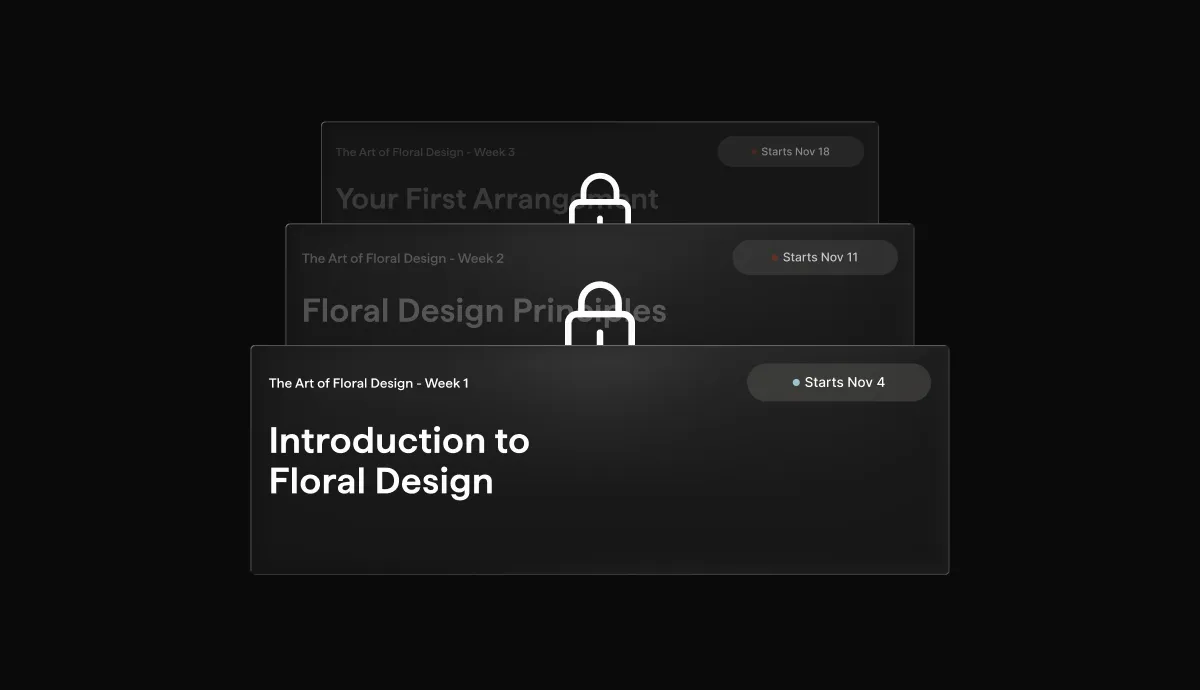
A cohort-based course runs on a fixed schedule with a defined group of students who progress through the material together. It typically includes live sessions, group discussion, peer accountability, and direct access to the instructor.
Best for: Transformation-heavy content, high-ticket offers, topics that benefit from community and accountability, or creators who want to build strong student relationships.
The Key Tradeoffs
Time Investment
Self-paced courses require significant upfront production but minimal ongoing time. Cohort-based courses require recurring time every time you run them. If you run four cohorts a year with live sessions, that's a significant commitment.
Completion Rates
Cohort-based courses have dramatically higher completion rates. Deadlines, peer accountability, and live sessions create momentum. Self-paced courses see average completion rates of 10–15%. Cohort-based courses often reach 70–80%.
Pricing
Cohort-based courses command significantly higher prices because of the live access, accountability, and community they include. A self-paced course might sell for $297. The cohort version of the same content, with weekly live calls, might sell for $1,500 or more.
Scalability
Self-paced courses scale more easily. Once the content is built, you can sell to hundreds of students without additional work. Cohort-based courses are limited by your ability to deliver a quality live experience, which typically caps cohort size.
A Hybrid Approach
Many experienced creators combine both. They run cohort-based courses to refine the curriculum and generate testimonials, then release a self-paced version for passive sales. This approach lets you earn at both price points and serves different types of buyers.
The Decision Framework
Ask yourself:
- Does my content require community or accountability to work?
- Do I want recurring active involvement or mostly passive delivery?
- What price point am I targeting?
- How large is my current audience?
The answers will usually point clearly to one model or the other. Start with the format that fits your current capacity, not the one that sounds ideal in theory.